




Sixth-generation helmet system will provide pilots with superior battlespace awareness
FORT WORTH, TEXAS – Dec.12, 2025 – Collins Elbit Vision Systems (CEVS), a joint venture between Elbit Systems of America (Elbit America) and Collins Aerospace, an RTX (NYSE: RTX) business, has successfully completed the Critical Design Review for the Zero-G Helmet Mounted Display System+ (HMDS+), tailored specifically to meet the United States Navy’s requirements under the Improved Joint Helmet-Mounted Cueing System (IJHMCS) program. This program focuses on adapting and integrating the advanced Zero-G HMDS+ into the F/A-18E/F Super Hornets and EA-18G Growlers, ensuring these aircraft benefit from enhanced operational capabilities that align with the U.S. Navy’s mission needs.
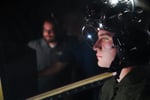
The Zero-G HMDS+™ is a sixth-generation helmet-mounted display system that provides a fully immersive, high-definition view of the battlespace. This enables aircrew to make split-second decisions at high speeds with superior situational awareness, enhancing mission effectiveness and survivability.
Captain Joseph Kamara, Naval Aircrew Systems (PMA-202) program manager said, “Aircrew health and safety is our number one priority. The Zero-G being integrated through our IJHMCS program promises to relieve aircrew of neck and back strain and greatly improve ejection safety. We are excited to be at the leading edge of safety and technology, and this important milestone is a critical step toward deploying this capability for our F/A-18 and EA-18 aircrew.”
The Zero-G HMDS+ builds on CEVS’ legacy of delivering fourth- and fifth-generation HMDS. It combines combat-tested tracking and low-latency technologies with a cutting-edge display to deliver accurate, real-time information. The superiority of the Zero-G HMDS+ is in its ability to fuse mission data, sensor video and weapon system information while serving as a primary flight instrument.
“Zero-G is providing sensor fusion at the edge,” said Luke Savoie, Elbit America’s President and CEO and CEVS board member. “This system is critical technology, while remaining lightweight. As fighter aircraft level-up, the HMDs of those systems need to as well. Zero-G provides unmatched head-up, sixth-generation battle management capabilities.”
“When our team began working on the Zero-G HMDS+, our goal was to provide aircrew with the safest, most advanced helmet system on the market,” said Collins Aerospace's Daniel Karl, co-general manager of CEVS. “This milestone confirms our helmet is ready for the next phase of development and brings us one step closer to delivering this advanced capability to naval aviators.”
The program will now begin rigorous airworthiness testing and full integration with aircraft avionics and mission systems. Initial operational capability is expected in 2027. The system is planned to be fielded on all operational U.S. Navy and Royal Australian Air Force Super Hornets and Growlers, totaling more than 750 aircraft.